Day 54 - Infrastructure as a Code (IAAC) 🏗️
Hey there! 👋
I'm Tushar Ranjan, a DevOps Engineer passionate. Currently, on a learning adventure, I'm here to share my journey and Blogs in the world of cloud and DevOps.
🛠️ My focus? Making sense of AWS services, improving CI/CD, and diving into infrastructure as code. Whether you're fellow interns or curious enthusiasts, let's grow together in the vibrant DevOps space.
🌐 Connect with me for friendly chats, shared experiences, and learning moments. Here's to embracing the learning curve and thriving in the exciting world of AWS DevOps Technology!
In today’s fast-paced DevOps environment, the need for automation and consistency in managing infrastructure has become paramount. Two critical concepts that have emerged to address these needs are Infrastructure as Code (IAAC) and Configuration Management (CM). In this blog, we'll explore what IAAC is, its benefits, how it works, and how it compares to Configuration Management, a key aspect of infrastructure management.
Infrastructure as a Code (IAAC)

What is Infrastructure as a Code?
Infrastructure as Code (IAAC) is a practice in IT that codifies and manages IT infrastructure as software. This approach allows developers and operations teams to automate the management, monitoring, and provisioning of resources, eliminating the need for manual configuration of hardware devices, operating systems, applications, and services. IaC treats infrastructure as code, which means it can be stored, versioned, and maintained in the same way as application code.
Infrastructure components that can be managed using IaC include networks, virtual machines, load balancers, and more. The code that defines these components is typically written in higher-level or descriptive languages such as YAML or JSON.
Benefits of Using IAAC
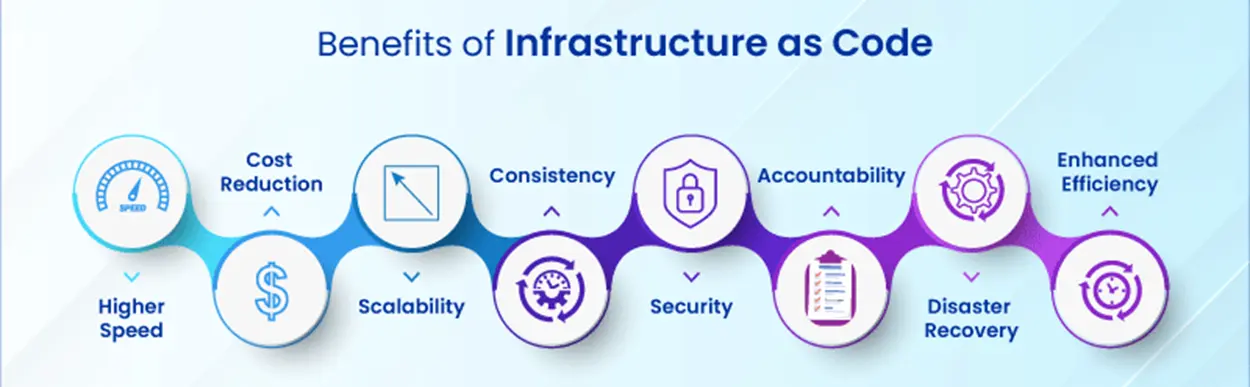
The adoption of IAAC offers numerous benefits, including:
Cost Reduction: By automating time-consuming infrastructure tasks, IAAC allows engineers to focus on more critical tasks, leading to reduced operational costs.
Reduced Errors: Automation reduces the risk of human errors, which are common in manual processes.
Improved Security: IAAC enables the consistent application of security standards across infrastructure, which enhances security strategies and reduces the need for frequent security reviews.
Increased Efficiency: IAAC automates many processes, such as virtualization, user account management, and network management, leading to faster and more efficient operations.
Improved Consistency: IAAC ensures that deployments and configurations are consistent, reducing the risk of resource wastage and downtime.
Self-Documentation: IAAC creates detailed reports and documentation of every process, making it easier for new employees or configuration managers to understand the infrastructure setup.
Elimination of Configuration Drift: IAAC ensures that subsequent deployments of the same infrastructure code do not alter the existing setup, maintaining consistency across deployments.
Common Tools Used for IAAC
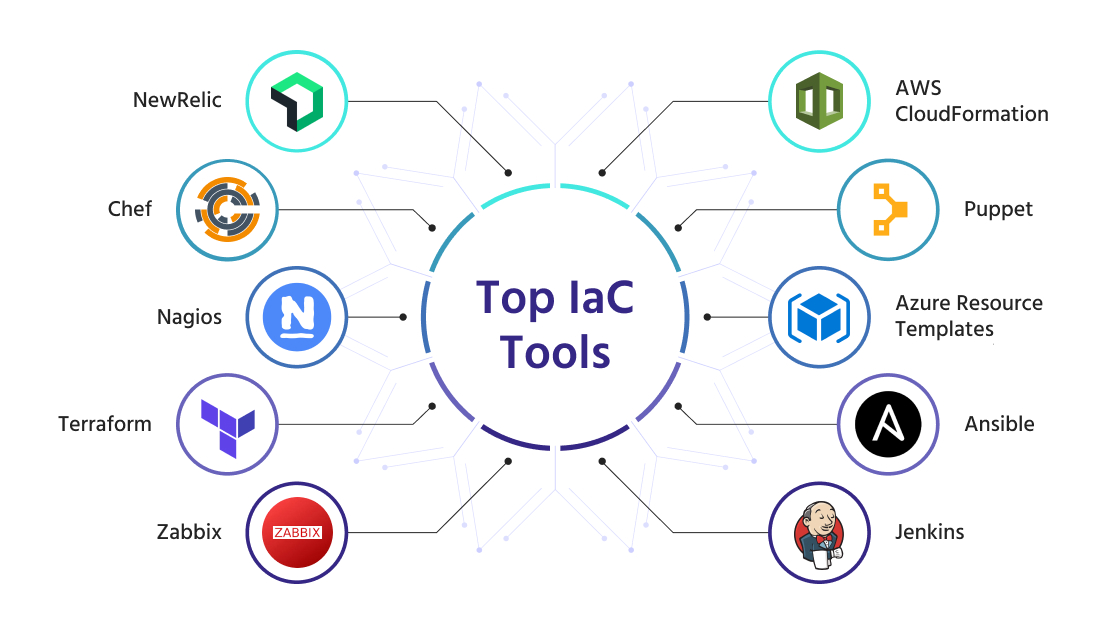
Several tools are commonly used to implement IAAC, including:
Terraform
AWS CloudFormation
Azure Resource Manager (ARM)
Google Cloud Deployment Manager
Common Applications of IAAC
IAAC can be applied in various scenarios, such as:
Defining entire infrastructure setups, including server configurations, networking, and security rules.
Creating isolated testing environments, deploying applications, running tests, and tearing down resources after testing.
Defining scaling policies and load balancers for automatic infrastructure adjustments based on traffic patterns.
Managing network infrastructure, such as virtual private clouds (VPCs), subnets, security groups, and route tables.
How Does Infrastructure as Code Work?

IAAC can be implemented using two main approaches:
Imperative Approach: The developer specifies the exact steps that the IAAC tool must follow to achieve the desired state. This approach gives the user control over the automation process.
Declarative Approach: The user specifies the desired end state, and the IaC tool determines the steps needed to achieve that state. This approach is more abstract and focuses on the "what" rather than the "how."
The workflow typically involves writing the infrastructure specifications in a domain-specific language, sending these specifications to a server or management API, and then implementing the specifications to create and configure the necessary resources.
Types of IAAC

IAAC can be categorized into several types, including:
Scripts: Used for simple or one-off tasks, not recommended for complex automation.
Configuration Management Tools: Automate the installation and configuration of software on servers (e.g., Ansible, Chef).
Provisioning Tools: Automate the creation of infrastructure components (e.g., AWS CloudFormation, Terraform).
Containers and Templating Tools: Create and manage pre-configured environments for applications (e.g., Docker).
Configuration Management (CM) 🧰
What is Configuration Management?
Configuration Management (CM) involves maintaining computer systems in a consistent and desirable state. It ensures that all software and hardware assets in an organization are optimally configured and up-to-date. CM is crucial for maintaining consistency across development, testing, and production environments.
Benefits of Using Configuration Management
Some of the key benefits of CM include:
Increased Consistency: Ensures that applications behave predictably across different environments.
Increased Security: Helps identify and track security vulnerabilities, preventing unauthorized access.
Increased Compliance: Assists organizations in complying with regulatory requirements.
Greater Efficiency: Automates the deployment process, reducing time and effort.
Improved Collaboration: Facilitates collaboration between development and operations teams.
Disaster Recovery: Ensures that assets are easily recoverable in case of failures.
Easier Scaling: Simplifies the process of adding more resources to an application.
Common Tools Used for Configuration Management
Popular CM tools include:
Ansible
Chef
Puppet
How Does Configuration Management Work?

The CM process typically involves four steps:
Identification: Gathering configuration data from different environments and securely storing sensitive information.
Baseline: Establishing a known state of configuration that is free of errors.
Version Control: Using a version control system to track configuration changes.
Auditing: Reviewing and approving configuration changes to maintain accountability and visibility.
IAAC vs Configuration Management: Making the Right Choice
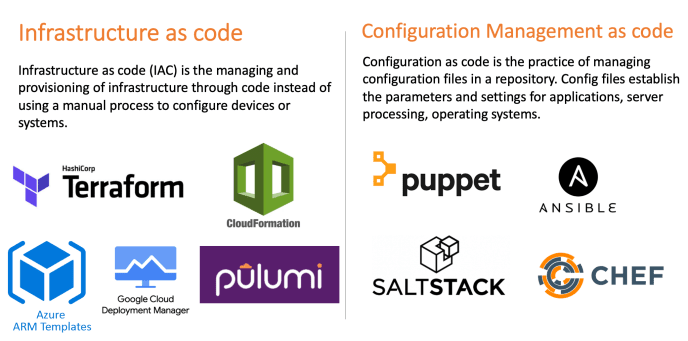
While both IAAC and CM are essential in modern IT environments, they serve different purposes. IaC focuses on automating the creation and provisioning of infrastructure, while CM focuses on maintaining the consistency and desired state of systems over time. The choice between IaC and CM depends on the specific needs of your project.
In many cases, a combination of both practices provides the most comprehensive solution, allowing for automated, consistent, and secure infrastructure management.
Conclusion
Infrastructure as a Code (IAAC) and Configuration Management (CM) are critical tools in the modern DevOps toolkit. By automating and codifying infrastructure and configurations, organizations can achieve greater efficiency, security, and consistency in their IT operations. Whether you are deploying new infrastructure or maintaining existing systems, understanding and implementing these practices is essential for success in today’s fast-paced IT landscape.


